Offensive Dance for Young Audiences
Two premieres and yet no premiere

In fact, PURPLE – International Dance Festival for Young Audiences would have taken place for the fifth time in Berlin's Uferstudios from 16 to 24 January. As an offensive dance, we would have celebrated not only our first birthday, but also two wonderful premieres: ‘A Human Race’, produced by TANZKOMPLIZEN, and ‘Strange Garden’, a co-production of PURPLE Tanzfestival. Due to the Corona situation, both dance pieces could not be performed in front of an audience. When this will happen remains uncertain. What is it like to work as a choreographer in such circumstances, what happens to production, personal creativity and your own motivation? We talked to Grichka Caruge (‘A Human Race’) and Colette Sadler (‘Strange Garden’) about it.
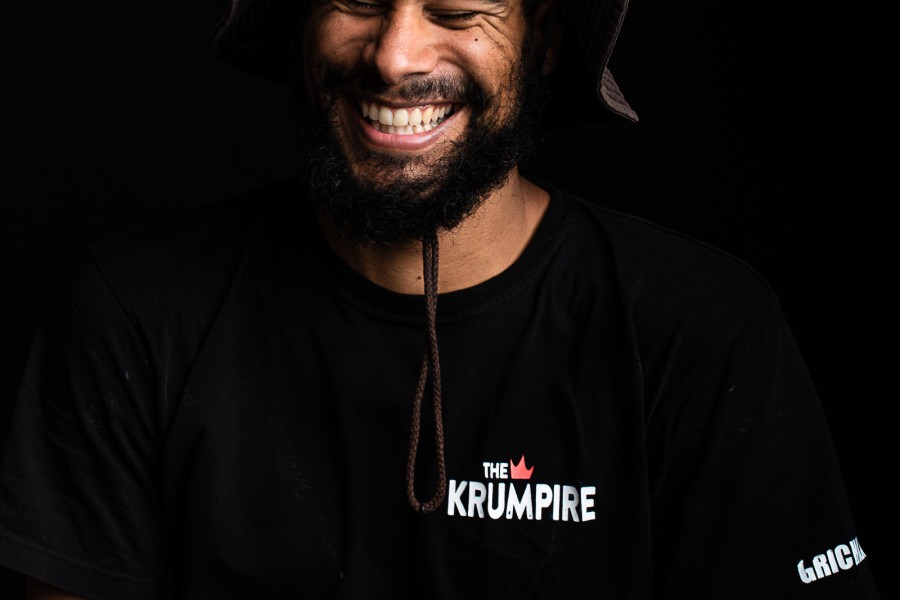
“When you get tested so many times, you think of illness and death instead of life all the time. On the other hand, there is a kind of bright spot on the horizon, because with our work we create moments of hope in this dark time. We are able to do something and this opportunity inspires creativity. We are trying to turn our experiences into something positive,” says Grishka about working during the pandemic. The Krump piece “A Human Race” comes with a lot of physical contact, regular corona tests were essential for the samples. Another challenge: Most of the five dancers are not from Germany. “We did not know - some of us are not from Germany: Will the borders be closed? Do we have to go home? Can we come back? But in a way, all this frustration is good for Krump, because Krump needs challenges and friction. From this, Krump was born.”
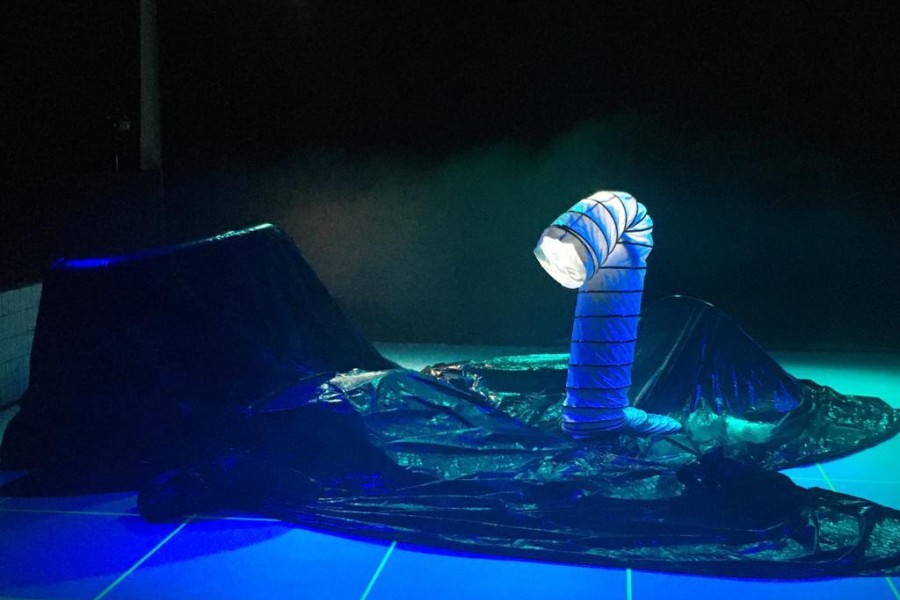
For Colette, on the other hand, Corona was not such a big problem especially for the production of ‘Strange Garden’: ‘Since the performers in this work work work work with objects and hide in and behind them, it is quite easy to observe the rules of social distancing, as there is hardly any physical contact in this work.’ Colette sees the challenge more in the many uncertainties in the planning and around it: When will the performances start again, what do we have to pay attention to, how do I bring home schooling and choreographer job together?
Both Grichka and Colette also find positive experiences in working with Corona: “In general, the pandemic affects us all in different ways, so that everyone feels how the situation affects personal mood/energy – even though it feels positive for all of us to work together at the same time”, says Colette.
And what happens to the two offensive dance pieces? Does the audience find ‘a piece of corona’ in it? Colette is very clear: no, “Strange Garden” lives in a strange visual cosmos that wants to convey fantasy, wonder and beauty to a young audience.” Grichka, on the other hand, feels a stronger pandemic influence in “A Human Race”: “Circumstances definitely have an impact on the play. When you create something, you always talk about what you are going through at that moment. ‘A Human Race’ is a story about humanity. But it also refers to Corona, to the whole worrying situation that brings tension and uncertainty.”
Two premieres without a real premiere. How is it to know how to choreograph a whole piece and not be allowed to have an audience in the end? For Grichka, hard: “As an artist, I try to make people feel and think if they want to. I want to create a connection that is not quite possible in the current situation. But I also know that the piece is heard and that it has an effect.” Colette: “You can feel the absence safely, but the heart of the choreographer knows that one day the audience will return to the theatre and at that time the love and the need for live theatre will be all the higher. Happy times will come again.”
“One feels the absence for sure but the choreographers heart knows that one day audience will return to theatre and at that time the love and need for live theatre will be higher. Joyful times will come again.” Colette Sadler
And after that, what does a choreographer take away from the pandemic? Colette Sadler is rather cautious, the future is just the future. We will certainly only understand later what actually happened to us. However, Colette can already name some things that would probably not have developed accordingly without Corona: “During Corona, I had the chance to expand my choreographic practice to other media, i.e. sound/video works. I also took it as an opportunity to expand my curatorial practice.” And Grichka? “I learned that being surrounded by my family is crucial in times like these. I really couldn't stand being alone, just commuting between work and an empty apartment, constantly thinking about the piece, no people on the streets, no restaurants, nothing. So I brought my family here.”
Thanks to Colette and Grishka for the exciting insights!
About the choreographers
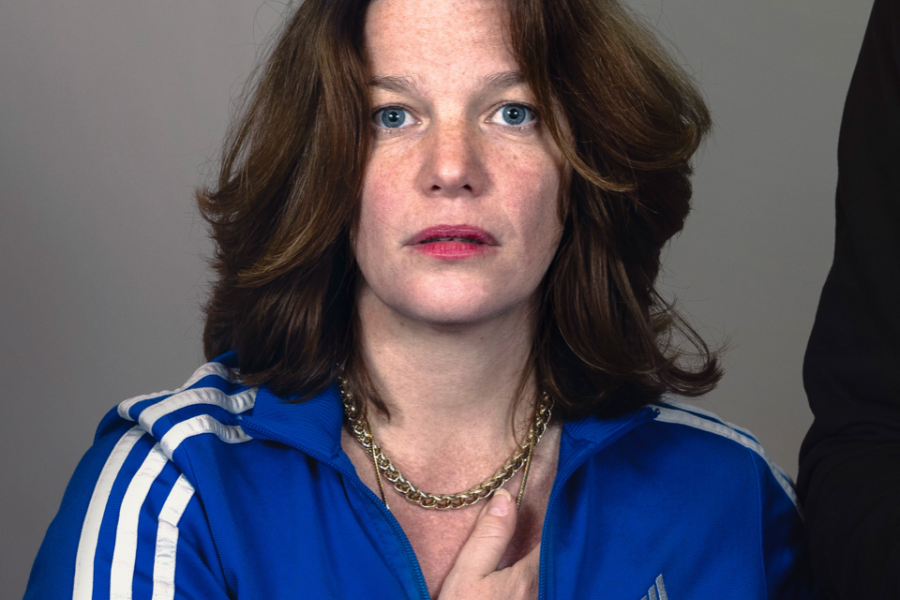
Colette Sadler (Glasgow *1974) first trained in classical ballet, followed by a BA (Hons) at the Laban Centre, London. As a member of the Transitions Dance Company ́95 she later worked as a dancer for choreographers. In 2002 she initiated Stammer Productions in Glasgow to support her artistic production in the fields of choreography, performance and curation. Since 2006, Sadler's dance works have been shown internationally in numerous contexts for dance and visual arts. In February 2021, she will curate the 4th edition of the multidisciplinary arts festival www.presentfutures.org in collaboration with CCA Glasgow and Feral Arts. www.colettesadler.com
At the age of 11, Grishka Caruge discovered hip-hop with Kader Attou and Dominique Lisette and joined projects with renowned companies such as Black Blanc Beur, Accrorap and Revolution. He teaches Krump and Hip Hop internationally since 2007 and works with renowned choreographers such as Kamel Ouali, Blanca Li, Stephane Jarny, Georges Momboye, Corinne Lanselle for musicals, choreographic pieces, tv sets and video clips. www.ciearttrack.com/grichka